
 Apple Podcasts
 Spotify
 RSS Feed
 Amazon Music
 YouTube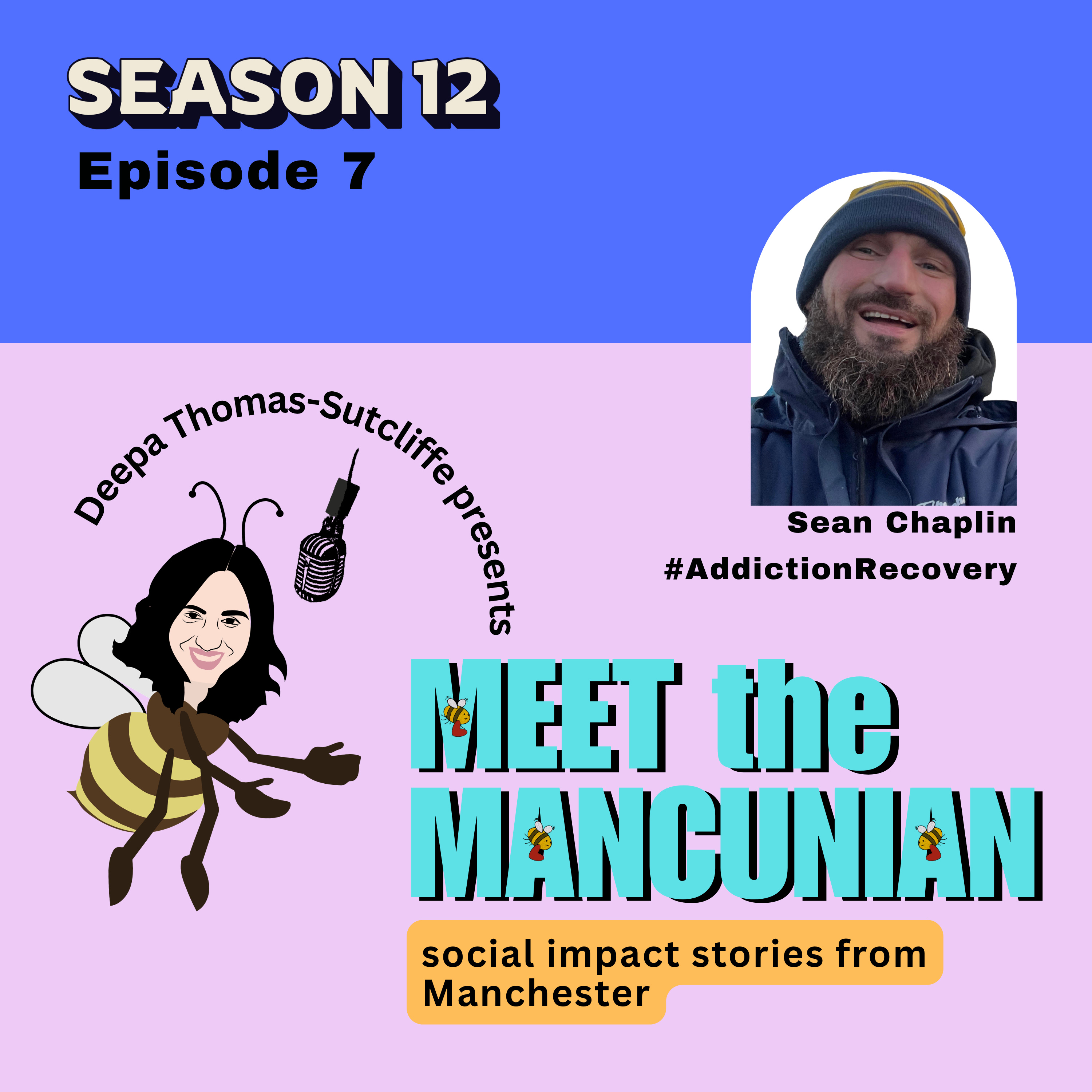
Host Deepa Thomas-Sutcliffe welcomes listeners to the seventh episode of Season 12 of the Meet the Mancunian podcast with Sean Chaplin, co-founder of Rehab Fitness. Sean shares how, after 30 years of addiction and 42 prison sentences, support from Acorn Recovery Services helped him rebuild his life in Manchester, motivating him to give back.
He explains how he and his co-founders Kate and Liz created Rehab Fitness as a CIC offering free gym, yoga, boxing, and community activities to help people stay connected after therapy, build structure, and regain self-worth. Sean describes impact through testimonies, volunteer-led community work, and opportunities like PT courses and skydiving. He calls for kindness, reduced stigma, and greater empathy, and outlines plans to expand through partnerships and wider referrals.
Did you know:
· Prison leavers in the UK face significant challenges with housing, employment, and rehabilitation, with approximately 50,000 individuals released annually.
· Around 35% of prison leavers require support for substance misuse according to a 2026 report.
Key resource:
Time stamps of key moments in the podcast episode &transcript:
(01:32) From addiction to recovery
(02:05) Starting Rehab Fitness
(03:13) Defining success and hope
(04:40) Real world impact stories
(07:33) Challenges and funding
(09:06) Motivation and staying well
(10:34) Growth plans and how to help
(13:32) Stigma and kindness
🎧Listen on Apple Podcasts, Spotify, YouTube or
www.meetthemancunian.co.uk
#Manchester #SocialImpact #Podcast#AddictionRecovery #PrisonLeavers
I hope you enjoyed listening to the podcast episode. Please do check out my other podcast episodes for a bit of inspiration.
Ep 12.7 Sean Chaplin transcript
Intro
[00:00:00] Hello and welcome to Season 12 of the Meet the Mancunian podcast: social impact stories from Manchester. I'm your host, Deepa Thomas-Sutcliffe, and I'm so glad you're here today.
[00:00:12] This season I'll be speaking with people who are driven by passion and guided by purpose, individuals working in different ways to shape Manchester and strengthen our communities.
[00:00:24] In each conversation we'll explore what motivates them, what keeps them going, and what impact their work is having across our city. These are honest human stories about why people care deeply about what they do.
[00:00:38] New episodes drop every Tuesday. You can listen on Apple Podcasts, Spotify, YouTube, or www.meetthemancunian.co.uk.
[00:00:48] Let's meet this week's Mancunian guest, talking about supporting prison leavers recover from addiction.
Episode 12.7 - Meet Sean Chaplin
[00:00:55] Deepa Thomas-Sutcliffe: Passionate about supporting people recovering from addiction. We hear from Sean Chaplin, co-founder, Rehab Fitness.
[00:01:03] Deepa Thomas-Sutcliffe: In Sean's own words.
[00:01:05] Sean Chaplin: But just, seeing how much people are smiling and grateful after each session what we put on. That's makes it all worthwhile for me. Even though we do all this for free, I feel like a millionaire. I feel overflowing with love and energy and it's just, no amount of money I could do for me what I see helping other people.
[00:01:24] Deepa Thomas-Sutcliffe: Thank you so much, Sean for joining me today.
[00:01:26] Sean Chaplin: You are welcome.
[00:01:27] Deepa Thomas-Sutcliffe: Sean, first, what first sparked your passion for working supporting the Manchester community?
From Addiction to Recovery
[00:01:32] Sean Chaplin: After being lost to addiction for 30 years and on the back of 42 prison sentences, I found the Recovery community. Acorn Recovery Services picked me up and brought me to Levenshulme in Manchester and helped me to turn my life around.
[00:01:47] Sean Chaplin: So now I want to give back and help the people of Manchester and people of wherever really, whoever I can help. I've been helped, and we can only keep what we've got by giving it away.
[00:01:56] Deepa Thomas-Sutcliffe: Thank you so much for sharing your own personal journey and how you found support in recovering from addiction and how you'd like to now give back.
Starting Rehab Fitness
[00:02:05] Deepa Thomas-Sutcliffe: How did you start your journey with Rehab Fitness?
[00:02:08] Sean Chaplin: I met my partner Kate in therapy while I was doing the deep emotional attachment program at Phoenix Mill, which enables working with a level seven counsellor to undo all the stuff that I've been pushing down, taking, drinking drugs for years.
[00:02:21] Sean Chaplin: Before coming out to prison, I realised fitness was good to get people connected. And it was good to help people to feel part of something and realise the worth, that they don't have to just be on the streets or living in a tent as I used to do.
[00:02:36] Sean Chaplin: So me and my partner started training together. And they got asked, do I want to do volunteering at the gym? And coach for CGL Manchester. So I took up that opportunity. I got given the innovation fund to do my personal trainer course, passed as a personal trainer.
[00:02:53] Sean Chaplin: My girlfriend did the same and passed as a yoga teacher. she's passed as a personal trainer, we both become boxing instructors as well. And we seen the massive impact that we had on helping people through gym, fitness, and wellbeing. So we set up the CIC Rehab Fitness and this is how it all started off.
[00:03:12] Deepa Thomas-Sutcliffe: Thank you.
Defining Success and Hope
[00:03:13] Deepa Thomas-Sutcliffe: And when you think about the change you're trying to make through Rehab Fitness what does success look like for both, for yourselves as well as for the people you serve?
[00:03:24] Sean Chaplin: So the first part of success is not using drugs and not committing crime. If I'm not using drugs and not committing crime, that's one day at a time, all I'm trying to achieve. I'm helping other people to achieve the same, we're also passing people off onto personal trainer courses.
[00:03:43] Sean Chaplin: We're taking 10 people's sky diving into an airplane in 12 days. We're doing a sky diver. We're just trying to help people to see that they're worth and stuff that they can achieve. And giving people hope, really, because I had no hope when I lived in a tent on a fishing pond, and I used to be taking drugs every day.
[00:04:00] Sean Chaplin: So a lot of people who come through addiction and through the services have been beat down that much, that they've got no self-esteem and they feel really low about themselves.
[00:04:10] Sean Chaplin: At Rehab Fitness, we want to show people you can achieve anything you want, and you can live a life beyond your wildest dreams. And that's what we're trying to build a community where we're there for each other and we all help each other. Because as I'm helping them, they're helping me. So it's a win-win. We're all helping each other.
[00:04:25] Deepa Thomas-Sutcliffe: Thank you for sharing that, and I really like that very much about giving people hope and helping people believe in themselves. And like you said, skydiving is one such initiative to help people with that.
Real World Impact Stories
[00:04:40] Deepa Thomas-Sutcliffe: Can you share a bit about the impact of what you do?
[00:04:42] Sean Chaplin: So I was trying to find some a few testimonies before because we've had loads of people giving us testimonies, saying listen, I didn't even believe in myself before I come to Rehab Fitness. And then Sean and Kate believed in me. We've got another director on as well that Liz and I, all three of us are from the same therapy group.
[00:04:59] Sean Chaplin: Liz does the yoga and the PT, and I also did a PT in myself. But a lot of people are saying, without Rehab Fitness, we would've definitely gone back out using. Another thing, because we've seen so many people after therapy.
[00:05:12] Sean Chaplin: We're trying to get into Smithfield at the minute because after two weeks going into a detox centre, people are going back out there because there's nothing to carry on, to give them structures when they come out to there. So that's why we set this up because we've seen so many people falling off after therapy. We wanted to keep people involved in a community where they didn't have to be going back out there.
[00:05:33] Sean Chaplin: So every day of the week, we've got something on where people can come and connect with, and stay connected because our connection is the opposite to addiction. But we've had loads of feedback, people saying we've helped them to achieve so much. People have been crying, telling us the end of the day. It's amazing what you do. You've helped us so much. People, girls, boys, both who've never been in the gym in their life. Now they're off on PT courses, going the gym every day themselves.
[00:05:55] Sean Chaplin: Kate did the boxing ultra white colour boxing first, then four of us did it, then another two did it for us last month. We've got seven people boxing for us in October. These people have never boxed in their life, but we've just seen people doing things and achieving things what they never thought were possible when they were stuck in the madness.
[00:06:11] Deepa Thomas-Sutcliffe: Thank you for sharing that you're helping people find structure after that therapy. That's probably when, like you said, the drop off does happen and if you don't have support. So it's really nice that Rehab Fitness is creating this welcoming space where people of all ages and genders can get involved, and it's really important.
[00:06:33] Deepa Thomas-Sutcliffe: Is there a moment that made you stop and think, yes, this is why we do what we do.
[00:06:38] Sean Chaplin: To be honest with you, even when I was in the madness, I liked helping people, but I probably used to help people in the wrong ways. Thinking that I was helping people turn up with pockets full of drugs and whatever. But since learning how to live life without drugs and that and dealing with the problems that what was inner.
[00:06:55] Sean Chaplin: Because I used to try and fix it the inner problems with exterior things all the time. But just seeing how much people are smiling and grateful after each session what we put on. That's makes it all worthwhile for me.
[00:07:07] Sean Chaplin: Like I said, even though we do all this for free, I feel like a millionaire. I feel overflowing with love and energy and it's no amount of money I could do for me what I see helping other people. You know what I mean? I've been that person needing help now. I love helping other people. So does my partner. So does all of our team.
[00:07:25] Deepa Thomas-Sutcliffe: As you said, it also helps you. It motivates you as well as it motivates people who are benefiting from it.
Challenges and Funding
[00:07:33] Deepa Thomas-Sutcliffe: And, I can understand that the concept of paying it forward is so powerful and it's wonderful that you and your partner are able to do.
[00:07:41] Deepa Thomas-Sutcliffe: What's been the toughest part of the journey so far, and what's helped you navigate that?
[00:07:47] Sean Chaplin: Probably not being able to put these services in all the places because like we've got Trafford Council asking for us, Stockport Council asking for us. Wiggin wants us to do stuff all these different places want what we're doing. But because there's only me and Kate and Liz, we can't facilitate all these different things.
[00:08:06] Sean Chaplin: The other thing is, the government was funding some personal trainer courses, so we managed to get a few people onto personal training courses. But now the government has stopped the funding for that. So that's why the struggle is really funding and not knowing how we can help people. Because there's so many people waiting for the help but no funding or no resources to help us get them the help.
[00:08:27] Sean Chaplin: But on the back of that the thing that has helped us is Step Up Manchester have been and Flourish. The new Victoria building in town, they give us some money to buy boxing equipment, fishing stuff and that. So a few people have helped us, but it'd be amazing if we could find some places who could help us even more, so we could get people into work and do what we're doing really. Do you know?
[00:08:48] Deepa Thomas-Sutcliffe: I can understand that. And, resources and the ability to find sustainable funding is always challenging for nonprofits. But I'm glad that Step Up Manchester, Flourish have been really supportive. And both of them have been on the podcast and they are great causes definitely.
Motivation and Staying Well
[00:09:06] Deepa Thomas-Sutcliffe: When the work becomes heavy or the progress is slow, what helps you stay motivated and hopeful? Is there a ritual or a mantra or a belief that keeps you going?
[00:09:16] Sean Chaplin: What keeps me going is this, no matter how much work I do, it nowhere near I would do. My phrase is, this is baby food. Compared to the work, what I used to do in addiction, I would've travelled a million miles to get to wherever I need to get to use drink and drugs.
[00:09:34] Sean Chaplin: So none of this work is hard work compared to what I used to do to use drink and drugs, and the rewards what I get from doing this, what I do now way outweigh the rewards what I used to get, which were none when I was using drugs.
[00:09:50] Sean Chaplin: So that's what I do. I stick around services. I go to meetings, N-A-A-A-C-A, we've just learned how to do Reiki We're at peace. I'm at peace inside, and I believe by helping others helps me. So no, don't want to escape from nothing. I'm totally at peace inside and I don't want to run away anymore. That's what helps me keep doing what I'm doing and it's working up to now.
[00:10:12] Deepa Thomas-Sutcliffe: I'm sure it'll keep working much more. And thank you for sharing that this work you're doing actually makes you feel fulfilled and gives you that peace inside. And you remind yourself that you used to do more for the wrong reasons, and now you're doing it all for the right reasons and helping so many people. So that's also very powerful.
Growth Plans and How to Help
[00:10:34] Deepa Thomas-Sutcliffe: So what's next for you and Rehab Fitness?
[00:10:37] Sean Chaplin: We're looking, we're speaking with people now. Maybe you could help us turn this into a franchise. I've spoken to CGLs all over the country as well, who would really benefit having one of these. So we would like to go and help other people have their own CGLs go and show all these other organisations out to get what we've got here in Manchester.
[00:10:57] Sean Chaplin: And maybe bring other people on board as volunteers. So then we can branch out and go and do work elsewhere because we're maxed out here in Manchester every day. So that's where we're looking at growing. We're looking at growing and helping more people. That's the main goal of this all is helping people.
[00:11:13] Sean Chaplin: So we're looking at getting out and helping more people, because at the minute we're just doing, we've got everybody from Phoenix Mill. That's where we're based at. That's where we get everyone. So it'll be good to get social prescribing from the doctors and branch out and let other people know about what we do. People can come from anywhere, any area, they can all come and get involved if they want to get involved,
[00:11:32] Deepa Thomas-Sutcliffe: Thank you for sharing that. Sean. Can I just check what is CGL?
[00:11:35] Sean Chaplin: It is called Change Grow Live. The organisation what run all the drug organisations. They cover Manchester. They've got Liverpool, they've all over the country.
[00:11:43] Deepa Thomas-Sutcliffe: And they're supporting you?
[00:11:44] Sean Chaplin: So case of volunteering for them, I'm just waiting for my DBS check to come back for them. So they helped us. They helped us with the innovation fund to become a personal trainer, yoga teacher, whatever. We helped them by keeping people safe when they've come through them.
[00:11:58] Deepa Thomas-Sutcliffe: Thank you for sharing your plans and I hope more people can come forward to volunteer as well as to spread awareness and your plans to expand across. I hope those come to fruition.
[00:12:11] Deepa Thomas-Sutcliffe: Many of our listeners may want to help, but don't always know how. Where can individuals make the biggest difference in a simple, everyday manner, regardless of where they are?
[00:12:23] Sean Chaplin: Be kind to yourself. Be kind to others. And if you slip up, if you do wrong, admit that you do wrong and try and make amends straight away. Even a smile can change someone's day. Something so little as a smile.
[00:12:37] Sean Chaplin: What helped me to realise my worth was making brews, putting the breakfast morning out at Phoenix Mill, volunteering, putting breakfast straight for people for Shine. So that's what helped me to realise my worth is just helping others. I believe doing service is a big thing. When you help others, it help yourself. When you do good, good things come, it's not always easy, but just do your best.
[00:12:57] Sean Chaplin: That's all you can do, and when you put your head on your pillow at nighttime, if you can put your head on that pillow and realise you've not done no one, no harm in that day. And if you have done harm you're going to go and make amends the next day and apologise. You've had a good day. That's it. All you can do is just do what you can do and just try and be nice and help other people. Helping other people, It helps me, so it'll help you.
[00:13:17] Deepa Thomas-Sutcliffe: I think this concept of being kind is so important because there's so much good in the world if we can just all help each other in small ways. And, like you said, you sleep better because you've done something good for the day or regularly.
Stigma Kindness and Closing
[00:13:32] Deepa Thomas-Sutcliffe: What's something about your work or the voluntary sector that you wish more people truly understood?
[00:13:38] Sean Chaplin: I've been on a few calls today, about stigma really. Stigma's a big thing. We've just put on about one of the walks what we take. We take a walk every Wednesday morning. But someone just put on what, why I'm at work. So I said, listen, unfortunately some people can't go to work. Because a lot of people look down on people who are lost in addiction or mental health.
[00:13:57] Sean Chaplin: Another thing, what we normally do, we do litter picking. So we get teams of people to go out and pick litter for the community and then we talk to the residents and tell them that we're recovering addicts. Because every single person who I've met in recovery, they are good people. They've just been lost to addiction. It can happen to anyone.
[00:14:13] Sean Chaplin: Kate's come from a totally different background to me, had a really good upbringing, but addiction doesn't discriminate. Addiction can take anyone, anyone can be just a wage packet away from being sleeping on Piccadilly Gardens.
[00:14:25] Sean Chaplin: So have a bit of empathy and don't judge anybody. This could happen to your son, your daughter, your grandma, you or anybody you know. I think people need help. If we could be there and try and understand. Maybe be there for people rather than look down on them and kick them when they're down, I think that would change a lot of people's lives.
[00:14:42] Sean Chaplin: It's really nice to be nice. And I think it'd be brilliant if there's more volunteer opportunities for these people. Because there's so many people who want to do stuff like we collect the food from the prep manager in the Mandale. I've got people who go and pick that up every night and they go and give it to the homeless. Water in town, give it to the homeless. It's these people want to help people, but there's not that many opportunities out there for people to get involved volunteering.
[00:15:05] Deepa Thomas-Sutcliffe: I think that's really helpful. And also to just think about being a little bit more understanding and seeing that people do want to give back to the community. So just give them a chance to be, whether it be litter picking or taking food to the homeless or so many different important tasks that we need people to do. That's really important as well.
[00:15:29] Deepa Thomas-Sutcliffe: Is there something that you've come across recently which has inspired you?
[00:15:34] Sean Chaplin: That's a hard one, that really because every single day I'm being inspired. Because I didn't know any of this help was possible. And every day we're collaborating and meeting people who want to help people for free. They've got courses, they've got this, they've got that, and it's all for free. And people want help people.
[00:15:51] Sean Chaplin: It's amazing how much help is really out there if you want it. But I didn't know for 30 years. I thought I wanted help, but obviously I just wasn't looking in the right places, especially Manchester. Manchester's got a big recovery network, big community to help people. The drug organisations in Manchester are amazing.
[00:16:10] Sean Chaplin: But I'm being in inspired every day by people, even if they're not helping people who just want help. Just people who have got good, like on our community everyday people are connecting with each other. Are you all right? If someone doesn't turn up at the gym, they're like, listen, you all right?
[00:16:23] Sean Chaplin: So it's beautiful to see so many people. Beautiful people, Because I've been surrounded with people who've been lost to addiction all my life and. I thought they were all bad people but none of them are bad people.
[00:16:34] Sean Chaplin: They're just lost to addiction, but it's amazing now to see the recovery communities growing. It's like recovery is the new trend. I'm seeing the meetings and these places filling up now, a lot more people are getting into recovery and it's amazing. And I just want people to know you don't need to suffer on your own, get connected.
[00:16:51] Sean Chaplin: Because connection is the opposite to addiction. Get yourself to meetings. AA, NA, CA. Any meetings you want to do, the men's talking circle, Andy's Man's club. You know what I mean? Monday meet up, anything. There's loads of things out there where you can go off and do it for free, and people just want to help you for nothing. They don't want nothing from you. They just want to see you at your best. And it's amazing. It's beautiful.
[00:17:11] Deepa Thomas-Sutcliffe: I thought about connection being the opposite of addiction and the fact that Manchester has so many support networks available to help people on their journey out of addiction. Must be very difficult, but. I'm glad there's so much support out there.
[00:17:27] Deepa Thomas-Sutcliffe: Sean, I'm going to now move us to the signature questions I ask all my guests.
[00:17:32] Deepa Thomas-Sutcliffe: If Manchester had a superpower, what would it be? And how have you seen it in action?
[00:17:37] Sean Chaplin: The superpower, what I would say would be the Recovery Network. Recovery network because I'm from Wigan, myself. And a lot of these surrounding towns have not got the recovery network and the community. Manchester's got meetings every single day. You've got organisations, loads of different places where you can go and get help, so I think you've got an amazing superpower of a network of recovery if you want it.
[00:18:02] Deepa Thomas-Sutcliffe: I think that's really interesting. We haven't talked about that before on the podcast as much. So I think it'll be interesting to be aware of that.
[00:18:11] Deepa Thomas-Sutcliffe: If you could gift the city one new value, habit, or mindset, what would you choose to strengthen community life?
[00:18:18] Sean Chaplin: I think it would've to be a mindset that all these people begging on the streets, taking drugs, committing crime every day, are not doing that by choice. They're not doing that by choice and they can't just not take a drug. Because that's what I've had like the police. And that said to me in the past, they'll just stop taking drugs.
[00:18:37] Sean Chaplin: But I was powerless to drugs. So not as easy as just stop taking them, because if that were the case, I wouldn't be doing it in the first place. So I would like people to change their mindset and stop looking down on these people who are lost in addiction.
[00:18:50] Sean Chaplin: These people are still people, sons, still, people's daughters, whatever, dads, moms, family members. These people are lost, and they don't like doing what they're doing. And they really need help, change your mindset and let's think about, let's try and help these people rather than look down on these people. Stop judging.
[00:19:07] Deepa Thomas-Sutcliffe: It is really important because we don't know what people's stories are and how they've come to addiction. Like you said, they're still family members, they're still loved ones for somebody. And I do know that at least some of the charities, people have started charities because of losing a loved one to addiction. So it's really important to just remind ourselves of that and not judge.
[00:19:34] Deepa Thomas-Sutcliffe: If you could have a 10 minute conversation with a community hero from Manchester's past or present, who would it be with and what would you ask them?
[00:19:44] Sean Chaplin: If I could talk about any Acorn, I would talk about making more Acorn buildings because I still do stuff with Acorn now. They've not got enough beds for people, and it's amazing they pick people up from the prison gates, take them straight to the house, them put them through therapy, and then help people progress on from there to level two counselling.
[00:20:02] Sean Chaplin: They're going to college, I went to college to level three. They help people to rebuild their lives. To a pace where it's not too much and people can then volunteer, become working for these people. I'm seeing it every day. . It would be amazing to get more houses, more beds, and more Acorn services. That would be amazing.
[00:20:20] Sean Chaplin: I would ask any of these people, I would say, what do you think we could do to get more people into recovery? Because I've spoken to people in Piccadilly Garden who don't know where CGL is and where it's only 200 yards away, whatever.
[00:20:34] Sean Chaplin: So I'm thinking, what could we do to get more people involved with Rehab Fitness, get more people involved with recovery, give more people hope. How can we give the people of Manchester hope to realise that they don't need to suffer anymore? There is a beautiful life out there from how can we get them to realise this, that's what I would want to ask.
[00:20:55] Deepa Thomas-Sutcliffe: I think that's very powerful. You talked about a little bit earlier that hope, that life is not all doom and gloom. There is positivity ahead and there is support out there.
[00:21:06] Sean Chaplin: I never would've thought this, but life is beautiful. Life is amazing. But I know if someone would've been telling me that two years ago, I would've been like, listen, get your recovery and sling it. Because, that's not what I want to be hearing, when I'm down in the gutter.
[00:21:21] Sean Chaplin: But now I try and not so much tell people, but just show people, because they can't deny seeing it, they can listen to it and think, oh, hey, up talking crap. But when you're seeing it, they can't deny it. Do you know what I mean? It'd be amazing to get people to see the beauty of life today.
[00:21:37] Deepa Thomas-Sutcliffe: When you look back, what's the piece of wisdom or life lesson that this journey has taught you?
[00:21:44] Sean Chaplin: So this journey has taught me, no matter what trauma, no matter what has happened in your life drugs are not the solution. I thought drugs was amazing when I first tried it. It took away all that stuff that were going on inside. And it was fun for months or something, maybe a year tops at a push, but then on the back of that, then it was 29 years of not being fun.
[00:22:07] Sean Chaplin: So it's learn me no matter what's going on in inside, no matter what, pain, joy, whatever feeling you're feeling, you just, you can sit with them feelings. It won't harm you. You'll only grow from feeling them feelings. You don't need to, and you can't fix internal pain or feelings with external things, I think higher power whatever that is, I think will help.
[00:22:31] Deepa Thomas-Sutcliffe: Oh, it's really important to think about that. Thank you for sharing your life lesson. I'm sure it's one that really helps you and the people you support.
[00:22:41] Deepa Thomas-Sutcliffe: What's the best way for listeners to connect with you or to support your mission and learn more?
[00:22:47] Sean Chaplin: We've got social RehabFitness180 on Instagram, RehabFitness on Facebook. In the Phoenix Mills, we've got all the WhatsApp, so people can just scan the QR code, join our group anytime. If anyone wants to drop us a message, wants to get involved, they can come to the Phoenix Mill every day.
[00:23:04] Sean Chaplin: We've got things on: gym twice a week, run club twice a week, yoga. take people fishing, bike riding, boxing, all different things like that. They can just go to Phoenix Mill and we're not there ourselves, people will point them in the direction of us. And it's easy to just get involved. Just turn up, if it makes sure you're fit enough to do the stuff and you're good to go, you're part of the community then.
[00:23:22] Deepa Thomas-Sutcliffe: Thank you so much, Sean, for sharing so many interesting facets of how you're supporting the community and how we as people in the community can be more supportive and more understanding of those in that journey from addiction to recovery.
[00:23:41] Deepa Thomas-Sutcliffe: And I think it's a very good reminder because sometimes you just don't think about it. You don't realise the fact that those people actually crying for help. Really appreciate you taking the time today.
[00:23:53] Sean Chaplin: Thank you. Thank you for listening.
Outro
[00:23:56] Sean Chaplin: Thank you for listening to the Meet the Mancunian: social impact stories from Manchester. If today's episode resonated with you, please share it with someone who believes in the power of passion and purpose, or leave a review to help others discover the podcast.
[00:24:11] Sean Chaplin: You can connect with me on social media @MeettheMancunian on Instagram, Facebook, and Blue Sky, and @MeettheMancunian on YouTube.
[00:24:21] Sean Chaplin: I'm Deepa Thomas-Sutcliffe, and I'll be back next Tuesday with another story from the people shaping Manchester.
[00:24:28] Sean Chaplin: Next week we'll hear from Isabel Lapist who talks about neurodiversity.
[00:24:34] Sean Chaplin: Until then, thank you for listening and for being part of this community.
