

 Apple Podcasts
 Spotify
 RSS Feed
 Amazon Music
 YouTube
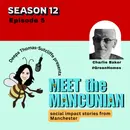
In episode five of the Meet the Mancunian podcast, host Deepa Thomas-Sutcliffe speaks with Charlie Baker, founder of Your Home Better, about making existing homes greener, warmer and healthier through retrofit. Charlie shares how becoming aparent and a belief in creating a future shaped his purpose,and explains why improving current housing can avoid major construction emissions.
He outlines retrofit measures such as insulating floors, walls and roofs, upgrading ventilation and windows, adding solar PV and using heat pumps to reach zero-carbon operation, while tackling mould, damp and fuel poverty. Charlie discusses impact through award-winning home tours, challenges of recruiting diverse construction workforce, myths about cost and heat pumps, and future plans including low-cost finance, neighbourhood-scale solar and a mobile retrofit demonstrator for schools.
Did you know:
· Retrofit refers to any improvement work on an existing building to improve its energy efficiency, making them easier to heat, able to retain that heat for longer, and replacing fossil fuels with renewable energy.
· Many UK homes are not purpose-built, heat leaks out of windows, doors and uninsulated walls, making the heating system work harder and costing more.
· The greenest building is one that already exists
Key resource:
Time stamps of key moments in the podcast episode &transcript:
(01:00) Meet Charlie Baker
(03:45) Why retrofit matters
(10:26) Impact and challenges
(15:17) Scaling the mission
(19:30) Passive cooling lessons
(21:22) Retrofit myths busted
(25:14) Manchester values
(28:51) Heroes wisdom
🎧 Listen on Apple Podcasts, Spotify, YouTube or www.meetthemancunian.co.uk
#Manchester #SocialImpact #Podcast #Retrofit #WarmHomes #sustainability
I hope you enjoyed listening to the podcast episode. Please do check out my other podcast episodes for a bit of inspiration.
Episode 12.5 Charlie Baker transcript
Intro
[00:00:00] Hello and welcome to Season 12 of the Meet the Mancunian podcast: social impact stories from Manchester. I'm your host, Deepa Thomas-Sutcliffe and I'm so glad you're here today.
[00:00:13] This season, I'll be working with people who are driven by passion and guided by purpose, individuals working in different ways to shape Manchester and strengthen our communities. In each conversation, we will explore what motivates them, what keeps them going, and what impact their work is having across our city. These are honest human stories about why people care deeply about what they do.
[00:00:39] New episodes drop every Tuesday. You can listen on Apple podcasts, Spotify, YouTube, or at www.meetthemancunian.co.uk. Thank you for joining me. Let's meet this week's Mancunian guest. Hope you enjoy this final episode with a sustainability focus before we move to a new theme.
Episode 12.5 Meet Charlie Baker
[00:01:00] Deepa Thomas-Sutcliffe: Passionate about making homes greener and warmer. We hear from Charlie Baker, Founder, Your Home Better.
[00:01:06] Deepa Thomas-Sutcliffe: In Charlie's own words.
[00:01:08] Charlie Baker: You can have your neighbourhood, your community made better by the money you've saved. And you can have your children healthier and doing better at school because they live in a healthier environment. There are so many things we could win by doing this.
[00:01:21] Deepa Thomas-Sutcliffe: Thank you so much, Charlie for joining me today.
[00:01:24] Charlie Baker: Thank you for asking. I'm a little humbled and feel a slight moment of imposter syndrome. Why me?
[00:01:29] Deepa Thomas-Sutcliffe: I think it'll be really interesting. And you've got such an important mission that you want to communicate today.
[00:01:35] Deepa Thomas-Sutcliffe: Tell us first about what sparked your passion for supporting the Manchester community? Is there a particular story or a moment that started this journey?
[00:01:43] Charlie Baker: It's not just Manchester, if I'm honest. It's Manchester because this is where I've been for 43 years. So I'm an adopted Mancunian and I'm doing what I can where I can because I appear to be most effective here. If I move somewhere else, I try and do my best there, but I've got deep ties here.
[00:02:01] Charlie Baker: People know me and so this is the best place to start. But I don't think that what I do here is confined to here. And obviously I really hope that there are already other people around the country doing something similar.
[00:02:14] Deepa Thomas-Sutcliffe: What was the start of your journey?
[00:02:16] Charlie Baker: It's a multitude of points that add up on top of each other. I'm sure many of your listeners will have noticed that things are not quite right in the world and they would like to make change. And in my younger life, I was very fortunate to be involved with other people and with campaigns where we were able to prove that we could make a difference.
[00:02:36] Charlie Baker: We didn't just have to sit and let the world wash over us. But I suppose the particular crystallising point for me is that I've got children. And I read a piece in a magazine, some years ago that was, we have to create a future for our children, not an apology.
[00:02:57] Charlie Baker: And I thought, Ooh, that's a get out of bed in the morning kind of thing. That if I leave any stone unturned in my best to make sure that my children have as good a future as I can manage, then I will have not done what needs doing.
[00:03:14] Deepa Thomas-Sutcliffe: That's really powerful. I like that very much about saying let's make sure there is a future and we are not apologising for all the bad stuff that we do to the world. So really taking charge.
[00:03:25] Charlie Baker: We can't just apologise, there's too much pandering we did our best as large numbers of people across the planet suffer from the effects of our consumption of resource and our inability to reign it in. And I think we owe it to future generations as well as any that are here now to do our best.
[00:03:42] Deepa Thomas-Sutcliffe: Absolutely. Really important.
Why Retrofit Matters
[00:03:45] Deepa Thomas-Sutcliffe: So tell us about how your journey with Your Home Better began and what does it do?
[00:03:49] Charlie Baker: 40 years ago, I studied architecture at university. I never got round to qualifying because I was too hungry to get out there and build things. But it became quite apparent the greenest building is one that already exists. Every time we build a new house, the construction emissions that go with that house to build that house are between 50 and 80 tons according to authoritative sources. So, if you imagine that if we were to build all of the houses this government wants to get built, that's 15 million tons of CO2. That feels like quite a bit.
[00:04:20] Charlie Baker: It seems to me that we can do much better with our own homes. And so, I have spent probably nearly heading towards 20 years trying to see, trying to learn how to do it as well as I can. And then create ways of delivering it and eventually finding ways to scale it so that it becomes relevant.
[00:04:40] Charlie Baker: The thing that excites me about retrofit, as in low energy refurbishments of people's homes is that there are so many things that you can sort out while you're there. A lot of people regard their homes as their centre in this tumultuous world in which we live. And therefore, getting their homes just so is bound to do wonders for the confidence of somebody to go out into the world and do stuff.
[00:05:05] Charlie Baker: I seem to remember Gandhi said something a long time ago. Be the change we want to be or be the change we want to see. That actually if you make the changes to your home, you can demand of your service providers that you make the same change. In the UK, 53% when of UK homes are mouldy.
[00:05:23] Charlie Baker: We have a staggering number of people living in homes that are just not fit and especially older people, less able to pay for the heating in their homes. And so, we have this thing here called heat or eat. That feels to me to be basically immoral in a developed society. That, that we should have vulnerable people that we are unable to look after.
[00:05:44] Charlie Baker: And so retrofit for me, gives me the opportunity to go and do something about that and so I can improve people's mental health because their homes are comfier. I went into a home of somebody. It was quite clear that the man had been so cold for so long that he was actually exhibiting some signs that looked like dementia.
[00:06:02] Charlie Baker: I read up on when I got back to the office because I thought this isn't right. And it turns out if you're too cold for too long, your brain doesn't just does not get enough blood. because your body's going, no, keep the rest of it alive first.
[00:06:12] Deepa Thomas-Sutcliffe: No.
[00:06:12] Charlie Baker: It's that bad. It was minus two outside and it was only eight degrees inside his home. There are things we can do that way and then just imagine that we had a world where those communities often left out by the world around them, but where most of our construction industry people come from.
[00:06:30] Charlie Baker: Imagine if they could actually, because they were being paid proper wages? No minimum wage and no zeros contracts because there's so much work to do. We could employ people for wages and imagine if grand savings weren't being used to do things that you don't want to have done with your money. You can have your neighbourhood, your community made better by the money you've saved, and you can have your children healthier and doing better at school because they live in a healthier environment. There are so many things we could win by doing this.
[00:07:01] Deepa Thomas-Sutcliffe: That's really interesting. And I'm so sorry to hear about the gentleman whose cold surroundings are aggravating or creating those dementia symptoms.
[00:07:11] Deepa Thomas-Sutcliffe: But just because we have this audience around the world, can we talk a little bit about retrofit? Give us an example. You're living in a house. What does Retrofit do?
[00:07:20] Charlie Baker: In the UK, the average temperature is nine degrees, which is not very warm. I envy those people who are the parts of the planet that are warmer than that. And it's very wet here, we have a lot of water moisture in the air. And so when it gets cold, it condenses all sorts of places you don't want it to.
[00:07:39] Charlie Baker: So if your home is too cold. And you think, I can't afford the heating. Do I have to ventilate it? No, I'm just going to close all the vents. I'm just going to hope, I can stay warm. And then you breathe, you cook, you dry your laundry. The moisture then condenses on the inside walls of the house. Your house goes mouldy.
[00:07:54] Charlie Baker: So, what we seek to do that's the worst case, but there are many other people who've got howling drafts up from underneath their floors because one of the ways that a lot of the housing stock in Manchester was built a hundred years ago. Whereas it's a wooden floor above a gap underneath it that the air blows through and sometimes up through the floorboards.
[00:08:12] Charlie Baker: What retrofit is, it means fitting afterwards coming and fitting something that's already to something that's already there. So we insulate people's floors their walls, their roofs. Sometimes if budget allows, we change their windows. We upgrade the ventilation so that mould thing doesn't happen.
[00:08:29] Charlie Baker: And we seek to put photo voltaic panels on the roofs. They're the ones that generate electricity. We also then help people get heat pumps. because once you've got electricity being generated off your roof. Heat pumps start to become really quite handy things to have, and that then means that your home can be zero carbon.
[00:08:47] Charlie Baker: And so one of the things we did to a house that we won a little award for last year was that we did so much work to reduce the amount of energy the house needed to be warm, that could be generated over a year off the solar panels on the roof so that they needed three and a half megawatt hours per year to run the house.
[00:09:05] Charlie Baker: That's what the roof generated. That's the retrofit we want to help people get to. But obviously if someone just says, I'm really bored of having cold ankles. Can you sort my floor out? We'll do that. We'll just do that bit.
[00:09:15] Deepa Thomas-Sutcliffe: That's really helpful to have a holistic picture of what all retrofit can do. I was struck by what you said at the beginning where you said that the greenest house is the one that's already been built. If you can improve the quality of the existing housing, you don't need to build new housing.
[00:09:30] Deepa Thomas-Sutcliffe: When you think about the change you're trying to make, what does success look like for you and for the people you serve?
[00:09:38] Charlie Baker: This is where, it's not just about Manchester for me, it is about Manchester showing some leadership. It's possible to the rest of the UK and then the UK as one of the G8 countries to then able to stand up proudly among other nations and go, we could do it. How are you doing?
[00:09:55] Charlie Baker: And if that's led by householders, then that, for me is a truly empowering way of doing it. We're not waiting for politicians to do politics to us. We're effectively using them as what we elected them to do, which is do politics for us. So for me, success is getting retrofit to happen at a sufficient scale to make that difference that it is able to make, but does not currently realise its potential to make.
[00:10:19] Deepa Thomas-Sutcliffe: That's really nice. Manchester as an exemplar and then taking it to UK, and then taking it around the world.
Impact and Challenges
[00:10:26] Deepa Thomas-Sutcliffe: Can you share the impact of what you do, maybe one person's house or any other way that you want to share impact?
[00:10:32] Charlie Baker: We do house tours. So the one we run this Northwest Regional Construction Award for recently, we had a tour around their house. I've got a bunch of PhD students from the University of Salford coming over next Friday. We're going to take them round two of the retrofits that are within walking distance of here.
[00:10:53] Charlie Baker: One of them, we've not got her to zero carbon yet, but we have given her a very nice new natural material kitchen and a solid timber new staircase. because her house is tiny and we wanted to make that work better. And then the other house is one of the net zero operational energy houses that I was talking about earlier, as in off the roof, will run the house, and they've got exciting things like heat recovery, ventilation. So no matter what the climate's outside. You walk into their house, and it feels really quite pleasant to be in. So we show them that.
[00:11:26] Charlie Baker: And then my colleague Phoenix does a fantastic job of getting a lot of this out on social media because this is only going to work if we make sure people know it's possible. So many people do not realise that that this is feasible.
[00:11:40] Charlie Baker: A lot of people think that the kind of work we do costs quarter of a million pounds to do to your home. And indeed, there are some houses nearby that have cost that much and more to get to, arguably they've got to a slightly better standard, but I challenge you to notice it.
[00:11:54] Charlie Baker: So we thought that actually that zero operational energy was as good a proxy for zero carbon as we can get. Because seems to have become a wedge issue politically in this country, which it really shouldn't be because we share the same planet and it's reasonably clear that the problems of climate change are clear and present.
[00:12:13] Deepa Thomas-Sutcliffe: Thanks, Charlie. That's really good to talk about those two examples and great that students are also learning about it.
[00:12:20] Deepa Thomas-Sutcliffe: When you think about the journey you've been on, what's been the toughest part and how did you overcome it?
[00:12:26] Charlie Baker: The toughest part has been finding contractors to do the work actually. We're about a million people shy of a viable construction workforce in the UK. If there's any listeners around here who are interested in this, I know people on the tools who are earning more than most of my friends in offices are earning. So just have a think about it.
[00:12:46] Charlie Baker: If you're good at problem solving, good with your hands, come and have a career in retrofit. because this is the other thing that is so nice about it, is that obviously construction, it's a bit blokey or that's its stereotype.
[00:12:56] Charlie Baker: But actually, when you are going into people's homes, the people into whose homes you are going would love people that represent their communities, being the people that are doing work on them. So I know from our customers that they would like more women on the tools. They would like more black people to be coming around to their houses so they can see that their community is benefiting from the money they're spending.
[00:13:18] Deepa Thomas-Sutcliffe: I like that. And it's a good shout out to listeners to consider this if that's their skillset and their area of interest. And also representing your customers because people like to see people like themselves just as much as perhaps they want the warmer home.
[00:13:33] Deepa Thomas-Sutcliffe: When your work gets heavy and sometimes progress could be slow. What helps you stay motivated and hopeful?
[00:13:41] Charlie Baker: There's something really quite nice about making somebody's home better. Why are the businesses called this? Because actually when you take somebody's home and make it as good as you can get it. You maybe add a few little moments of beauty into it as well, just in some of the ways that you might detail a window reveal, or, build a staircase or a loft conversion or a kitchen.
[00:14:05] Charlie Baker: And then the, you can see the customer so much happier with their home. I can live off that for a while. And the fact that is clearly useful, that they become the ambassadors for the change we need, and they are happy to be that.
[00:14:18] Charlie Baker: So I ring many of our customers. Once you've had a retrofit from us, they will ring me years after it's happened to ask for advice on things and in return I can say, can I bring someone around your house? And we show people some of the things we've done to them.
[00:14:31] Charlie Baker: We took a customer around a house where we had moved her kitchen while we were doing the energy work. We also then did a bit of remodelling to the inside of the house and built a solid oak kitchen out of UK grown oak as well.
[00:14:45] Charlie Baker: I'm a big fan of reducing our reliance on foreign imports of timber and seeing whether we could just use a little bit more that we've done locally. Grow locally so that we can strengthen the viability of our own carbon sinks rather than having to use other people's, because that's because trees are actually one of the biggest chances for our future.
[00:15:07] Deepa Thomas-Sutcliffe: That's really, heartening in a way that you find that energy from other people with people's homes being made better in whichever way they choose.
Scaling the Mission
[00:15:17] Deepa Thomas-Sutcliffe: What’s next for you and your mission?
[00:15:19] Charlie Baker: What we are investigating at the moment, because there's so little funding for Retrofit in the UK and I'm desperate to democratise retrofit. I don't just want retrofit to be the preserve of perhaps the climate guilty, wealthy middle classes. That's not right.
[00:15:36] Charlie Baker: The people that will benefit the most in their everyday lives from a good retrofit are those people currently not able to pay for it. They may be willing to pay for it, but they're not able. So one of our missions is to find people that will lend us money cheaply enough and over a long enough term that we can use that to fund people's retrofits so that we can do more of them.
[00:15:58] Charlie Baker: So that's a piece of work we're looking at with Greater Manchester Combined Authority to see if we can make that happen. It's difficult because there's quite a lot of headwinds in that make that difficult.
[00:16:08] Charlie Baker: Another endeavour we're looking at is for an estate in East Birmingham. Where it's one of those estates that was laid out in such a way that there's lots of spaces left over after they'd planned the neighbourhood. And we've been looking at that idea of putting elevated photovoltaic arrays on those spaces. Because that's useful if you want to take the dog out for a pee in the evening, and it's chucking it down. You can maybe get a bit of shelter off the panels.
[00:16:32] Charlie Baker: If you want to go meet your mates, you can maybe meet in, in one of those but you'll also still have the grass underneath it. And we reckon that there might be a model in there where we put so much PV into this neighbourhood that the whole neighbourhood becomes its own power station, but not just its own power station.
[00:16:49] Charlie Baker: It's able to sell surpluses outside into the rest of the Birmingham to assist in paying for their own homes to be comfier and easy to heat. That's a model we're just working on at the moment. So by the time this podcast goes out, maybe we'll have some results that prove that.
[00:17:06] Charlie Baker: And then we're also talking to schools and colleges. We have a mobile demonstrator of retrofit. It's the community engagement vehicle and therefore humorously regarded called Kev. And Kev is a display vehicle. Kev’s got photovoltaic panels on the roof, a battery, like the ones you put in your house in the back of it, and an air to air, not air to water, heat pump on the front, and then a big screen to show people what's going on.
[00:17:33] Charlie Baker: And we're aiming to take that round schools so that we can try and excite the next generation in this idea that design and technology is an awful lot more than is currently available and that there are all these other things.
[00:17:46] Deepa Thomas-Sutcliffe: Thank you so much for sharing what's next for your mission. And it does sound like there's some really interesting things. I really like that about the self-heating neighbourhood and how that could perhaps become like an exemplar again to take to other markets. And hopefully Manchester as well.
[00:18:03] Deepa Thomas-Sutcliffe: Sharing Retrofit knowhow
[00:18:04] Deepa Thomas-Sutcliffe: So many of our listeners may want to help, but they don't know how. So where can individuals make the biggest difference in a simple, easy, and everyday way?
[00:18:14] Charlie Baker: That depends where they are, doesn't it? Obviously, if they're within Greater Manchester or even an hour's drive of here then they should get in touch with us, yourhomebetter.co.uk. We'll do anything we can to help where we can.
[00:18:27] Charlie Baker: We don't receive any funding. But as long as we can make payroll every month, we're a community interest company and we're a cooperative. So making money is not our goal. Making change is our goal. So if they're within the area, get in touch.
[00:18:40] Charlie Baker: If they're not in the area, but they think there might be appetite for what we're doing, then we're happy to share. Happy to help out if we've got anything to help that might help other people be able to deploy this themselves, then brilliant.
[00:18:54] Charlie Baker: If they've got their own ideas about how to make it better, then obviously the subsidiary to make your home better is make your retrofit delivery organisation better and they can get in touch with us and offer us some of their ideas.
[00:19:06] Charlie Baker: And I think we need a community of interest, certainly across the UK. Obviously other parts of the planet have different climates, different building forms, different ways of doing things. Because wanting to help is two things, isn't it? There is you want to help so that you can make your own immediate circumstances better. because enlightened self-interest is often more motivating than simple altruism.
Passive Cooling Lessons
[00:19:30] Charlie Baker: I would love people to see that they can make change and they've just got to find that bit that they do it in. I suspect that if you're in downtown Mumbai, you're probably not going to need some of the things that we've done in our work because it probably doesn't get that cold. Although actually, I've discovered phase delay. If you use wood fibre insulation on a building, then it will stop the heat leaving, but it'll also stop the heat getting in.
[00:19:56] Charlie Baker: And I've been looking at graphs recently. you can have 36 degrees down to 16, which is probably an autumn day in Mumbai. But you can get it to the point where there's enough insulation and it slows the passage of heat through itself, that the temperature's only plus or minus a degree throughout the day.
[00:20:13] Charlie Baker: I don't know whether that's useful. I've wanted to learn how they use wind catchers in Yemen. And some of those magnificent ways of passive cooling that, that have been deployed across the Middle East. Because I'm sure, quite a lot of those are not going to be that much use to cold dank Manchester, but some of them will be.
[00:20:32] Charlie Baker: And obviously those technologies that have been going for millennia, those are places we can help. But I think the other thing is to look to where the change, you might have a tiny little pinnacle, a little thread of change, but if you can weave that thread into a bigger fabric, then you can make even more change and make your own voice count alongside many.
[00:20:54] Charlie Baker: Because whilst I'm enormously flattered that you come to interview me, I wouldn't be doing this without an awful lot of people behind me.
[00:21:00] Deepa Thomas-Sutcliffe: Absolutely. And this is the thing, right? Everybody can contribute in different ways. All the tips you gave are great, but especially like the last one where you find your niche and then find how you can make that impact in any way that is possible under your circumstances.
[00:21:16] Deepa Thomas-Sutcliffe: Is there something about your work or about retrofit in general that you want people to understand better?
Retrofit Myths Busted
[00:21:22] Charlie Baker: The key myth that I might, that is an immediate functional one, which is a lot of people look at the price tag of a retrofit and they go that's too expensive. I'm not doing that. And what you realise, they haven't factored in is that, in the UK an average heating bill, and that's the average is 1700 pounds.
[00:21:42] Charlie Baker: A heating electricity is 1700 pounds. I think it's about to be 1,750 pounds a year. And so whilst the retrofit might cost for the sake of argument, 50,000 pounds. If I can save you 1500 pounds I'll bail on that piece of math halfway through, but you can imagine that if you then were able to borrow the money at a low enough interest rate over a long enough period, then you could actually have quite a good quality at or near zero carbon retrofit to no net extra cost to the cost of occupation you currently experience in your home, because you might be able to say, right here I'm, no, no longer going to have to pay 1,750 pounds to the energy companies. I can maybe give them 250 pounds. That gives me that 1500 pounds I can put into repaying the money that I borrowed to do this work.
[00:22:33] Charlie Baker: Hence this project in Birmingham. If I can then with my neighbours, sell some of that energy so I can get more money for it, then maybe I can also then earn a bit of income from the surplus of my energy when I got it, and then end up slightly better off.
[00:22:47] Charlie Baker: And obviously the other thing as well is that if I could hit the scale, you said what was my goal? To be relevant to get to that level. If I could take a neighbourhood of Greater Manchester and get a few hundred people in that neighbourhood, good high paid jobs in retrofit, they would then spend that money in their communities and then their communities would get better. And so I think everyone just says, oh, it's too expensive, it can't do it. But they're forgetting about all of those other benefits that come along with it.
[00:23:16] Charlie Baker: I think another one, again, immediate, but a lot of people don't think heat pumps work. They do. I've got one. It's warming me now. We've assisted people getting installed, about 15 of them. And we've only had one where somebody said, I'm not warm enough.
[00:23:29] Charlie Baker: And the only reason they weren't warm enough is because a different contract had missed a bit of the retrofit out and they were venting the heat out to four open chimneys that we hadn't spotted until I went and had a look.
[00:23:38] Charlie Baker: What other myths are there? You don't have to be a hippie to use natural materials. They actually work really well. I specify wood fibre in all of our retrofits, not because I want to go and hug a tree, but because actually the way trees work, you put water at the bottom of a tree, it gets sucked up the tree. And actually, if you take that wood fibre, when you put insulation and you put moisture in that wall. It takes that moisture and it disperses it through the wall.
[00:24:02] Charlie Baker: So it's way, way more robust. And then, as I said earlier, it also helps stop your house from overheating so it becomes the best material for the job but as well as being the best for the planet. What's not to love?
[00:24:13] Charlie Baker: Make more money on the tools than you can in an office. That's another one. Oh, yes. We don't just need people on the tools. We need people that can problem solve and are good with spreadsheets. One of the things, and I suspect that this is a global happening, when you start doing work to someone's home. home would've been looked after by all sorts of people over its lifespan, some of whom may not have known as much about what they're doing as would've been ideal.
[00:24:39] Charlie Baker: And so regularly we take things apart in houses and go, oh look, they've done that. And you have to work out a solution while you're there. You can't just go home and say to the householder, we're off now. You've got to solve the problem. And I find that quite exciting too, the opportunity to go, how? How am I going to do that? And I want other people along the journey for us. So some of it is quite boring. But some of it isn't.
[00:25:01] Deepa Thomas-Sutcliffe: Thank you for sharing all those myths and helping to bust it a little bit.
[00:25:05] Deepa Thomas-Sutcliffe: I'm now going to move us to the signature questions I ask all our guests.
[00:25:10] Deepa Thomas-Sutcliffe: So this one is about Manchester and it's great that you've lived here 43 years.
Manchester Values And Power
[00:25:14] Deepa Thomas-Sutcliffe: So if Manchester had a superpower, what would it be and where have you seen it in action?
[00:25:19] Charlie Baker: I suppose the advantage of Mancs is they're not half impressed with themselves and therefore, quite often we'll just crack on and make it happen.
[00:25:28] Charlie Baker: Realistically, if someone has a go at Mancs, they've don't half pile in. I don't want to swear on your podcast, but they'll take no SH one t from anybody.
[00:25:37] Deepa Thomas-Sutcliffe: Absolutely. And I love that about Manchester. I love that they are very protective of their own and everybody becomes their own very quickly. Whether you're born here or you're adopted Manc as I am, and you are.
[00:25:50] Deepa Thomas-Sutcliffe: If you could give Manchester one new value, habit, or mindset, what would you choose to strengthen community life?
[00:25:58] Charlie Baker: I wish Manchester had more distribution of wealth. Sometimes I cycle everywhere. Actually, I cycle to all of my site visits more so than I drive. I think I'm going to do more mileage on my bicycle this year than in the van.
[00:26:14] Charlie Baker: And when I'm in the city centre, I look at some of the conspicuous consumption and I think that's a bit mean. it worries me a bit that we're building these enormous towers in the city centre, but as with many cities across the globe, there's then a donor area immediately around a city centre where maybe things aren't going quite so well, and the idea that we're waving that wealth of those people, to me, feels a bit mean.
[00:26:40] Charlie Baker: And so if I wanted something to happen, I would want that conspicuous consumption to be in some way. No, I don't want to take stuff off people. I want to give it to other people. Let's have more equality.
[00:26:52] Deepa Thomas-Sutcliffe: It's your perspective and I think it's a good one. We can always do with more especially for the people who feel it most more ability for them to take care of themselves. Like you said earlier, heating or eating, that's not the kind of choice people should have to make and it's very difficult.
[00:27:08] Charlie Baker: And I suppose on a practical level, therefore, maybe what I want to have happen is I want there to be some kind of fund up in Greater Manchester that is very long-term patient low cost finance that is made available for those communities that are staring at that conspicuous wealth to make their neighbourhoods better, we could help with that.
[00:27:30] Charlie Baker: And then if I can, then also, I suppose the other more immediate thing that I would want Manchester to do would be to see the value in how we might better train people into the jobs that we should be able to build for them and actually build a much more coherent pipeline.
[00:27:49] Charlie Baker: One of the problems that we do have at the moment is, I know we can do this technically. And I know that we can do this financially if the money was cheap enough. And I know that the skills required to do it are not rocket science, but we haven't got the dots joined together with each other.
[00:28:05] Charlie Baker: So maybe the superpower I want Greater Manchester to have is the ability to join the dots to make that holistic call for change.
[00:28:12] Charlie Baker: That when I was younger, I learned about how cities turned up. And the great city states of Europe in the Renaissance. And I realised that actually city states are quite an interesting unit of organisation Now, obviously the city state of Greater Manchester, for us, it's quite a big place and people, there's enough oomph in two and a half million people to make change, if we could just have the ability to make it happen.
[00:28:41] Deepa Thomas-Sutcliffe: I like that very much about, like you said, connecting the dots, bringing the skills, the funding, and the know-how all together and actually making that real change happen.
Heroes Wisdom
[00:28:51] Deepa Thomas-Sutcliffe: If you could have a 10 minute conversation with a community hero from Manchester's past or present, who would it be with and what would you ask them?
[00:29:00] Charlie Baker: Because it wouldn't be one of them. It would be a room full of them, and it would be, when I first learned how to calibrate, oh, I come from a middle-class background and I went to university and I've got A Levels. But I lived in the community of Hulme, where at the census in 1991, a third of the community had no qualifications whatsoever.
[00:29:19] Charlie Baker: And in fact, this community in East Birmingham, I think still to this day, has a similar demographic. And I was humbled, but also spectacularly inspired by some of the older women held the community of Hulme together. And they didn't do it singly, they did it jointly and severally.
[00:29:38] Charlie Baker: And they were magnificent people, faulty each one in their own ways, but their commitment to the community to make the difference that needed to happen, I think probably is still smouldering in me.
[00:29:53] Charlie Baker: The Maureen Moonsammy of this world who just got on and did it despite the fact they didn't have the education to have made it easy. She just to use my earliest, she took no sh one t from anybody and I would love to have another chat with Maureen.
[00:30:06] Charlie Baker: She came round to my house just before she died to congratulate me on something I'd done at the time which I can't tell you how much it meant to me for one of my heroes of activism in Hume to come round my flat and say, you did all right, Charlie and I'd love to have another chat with Maureen.
[00:30:23] Deepa Thomas-Sutcliffe: That's very inspiring. And you're right to say that sometimes you don't need the special skills and the special qualifications. Thank you for sharing Maureen's story. And I feel like I need to look it up a little bit.
[00:30:35] Deepa Thomas-Sutcliffe: Looking back, what's a life lesson or a piece of wisdom at your journey has taught you?
[00:30:41] Charlie Baker: Here's the problem. I'm struggling to say it because it's quite difficult to know what the sweet spot is. On the one hand, you have to be confident enough in your position to be able to continue to fight for it, even when there are many around you trying to bring you down.
[00:30:56] Charlie Baker: There's no doubt that you have to hold onto your vision and you have to. But I suppose what it is, you have to hold onto your vision, but you have to recognise what the line in the sand is because there is no doubt that there will be some compromise needed.
[00:31:13] Charlie Baker: Otherwise, nothing will happen and there is no point in a vision unless you can at least get it to happen. And I suppose something I ponder on every now and then is that I've wanted to make so many things happen across so many places that I've maybe just not quite that. The other thing actually is focus and make sure that what you are going, what you are aiming for. You've not diluted yourself because you've been trying to do too many things all at once.
[00:31:37] Charlie Baker: That would be my lesson two. So Lesson one, have vision, but recognise that you will be called upon to compromise and make sure you know how far you can go so that you don't upset yourself doing it. But equally, something happens. And the other thing is don't spread yourself so thinly that you hurt yourself.
[00:31:57] Deepa Thomas-Sutcliffe: I think really both very relevant because I guess there's a part of the vision, which is how do you bring people on that shared vision? How does it become Charlie's vision versus a vision, other's share?
[00:32:09] Charlie Baker: And in that case, that's the third point that a vision held by one individual unless other people are either prepared to, to embrace your vision or you are sufficiently open in the vision that you are trying to create to allow others to get their, bring theirs alongside it, and you meld them together into a shared vision that is then sufficiently open to bring many more other people into it to create a more collectively held, collectively owned, and therefore more aligned to succeed vision.
[00:32:39] Deepa Thomas-Sutcliffe: So the three very powerful life lessons. thank you for sharing them with listeners and myself.
[00:32:45] Deepa Thomas-Sutcliffe: What's the best way for listeners to get in touch with you and support your mission?
[00:32:50] Charlie Baker: The best way to get in touch with us is to go to yourhomebetter.co.uk and you can get in contact with us through that. you want us to do something to your home, get in touch, and we've got many services that we can offer you from the teeny, tiniest amount of money you've got to spend up to the full whole house.
[00:33:07] Charlie Baker: I want my house to be zero carbon. If you're wanting to explore careers in it, get in touch and we can put you in touch with some of our supply chain so that they'll see if they've got jobs for you. if you are of a political bent and you can see that, you might be able to help us lobby some of the powers that be to join those dots that we mentioned earlier, do that. If you're in other countries around the planet, do please get in touch and share your stories because I would love to think that we're part of a much broader move to use our communities as those lodestones for the change we want to make.
[00:33:40] Deepa Thomas-Sutcliffe: I like that very much about that global collective all thinking. About how do you make the houses cleaner, warmer, and nicer to live in.
[00:33:49] Deepa Thomas-Sutcliffe: Thank you so much, Charlie. It's been a really good conversation.
[00:33:52] Charlie Baker: I hope you've enjoyed what I've had to say and thank you very much for listening. And I really look forward to hearing from any of you with the stories that you might have so that we can enrich this world in which we are all trying to make our way.
Outro
[00:34:04] Charlie Baker: Thank you for listening to the Meet the Mancunian podcast: social impact stories from Manchester. If today's episode resonated with you, please share it with someone who believes in the power of passion and purpose, or leave a review to help others discover the podcast.
[00:34:21] Charlie Baker: You can connect with me on social media @MeettheMancunian on Instagram, Facebook, and Blue Sky. And @MeettheMancunianPodcast on YouTube.
[00:34:32] Charlie Baker: I'm Deepa Thomas-Sutcliffe, and I'll be back next Tuesday with another story from the people shaping Manchester.
[00:34:39] Charlie Baker: Next week we hear from Chrissy Carr talking about addiction recovery.
[00:34:44] Charlie Baker: Until then, thank you for listening and for being part of this community.
